DMZ Tour from Seoul: What to Expect, What to Bring, and Mistakes to Avoid
Some trips from Seoul are easy to understand at a glance. A palace gives you history. A café street gives you pretty photos. A seaside train ride gives you a calm break from the city. A DMZ tour is different from the moment you start thinking about it. Even before the bus leaves Seoul, the mood already feels slightly heavier. People check their passports again. They speak a little more quietly. They wonder what they are really going to see, and whether the day will feel like tourism, history, or something in between.
That unusual feeling is exactly why a DMZ tour from Seoul stays in people’s memory. It is not the most relaxing day trip in Korea, and it is not designed to be. It is one of the few places near Seoul where the atmosphere matters just as much as the schedule. You are not only visiting famous locations. You are entering an area still shaped by division, military control, and the unfinished reality of the Korean Peninsula.
For many foreign travelers, that is what makes the DMZ worth considering. It offers something Seoul itself cannot fully show you. Food, shopping, and city views help you enjoy Korea, but the DMZ helps you understand a different side of it.
Why a DMZ Tour from Seoul Feels Different
A DMZ tour does not feel like a normal sightseeing course. Even when the route is organized and tourist-friendly, the setting is still a controlled border area. That alone changes the emotional tone of the day. You are not moving through a place built mainly for leisure. You are moving through a place where history, politics, and security still overlap.
That difference can be hard to explain before you go. On paper, the itinerary may look simple. In real life, the experience feels more focused and more restrained than most day trips from Seoul. There is less of the casual freedom people expect from city travel. In exchange, there is a stronger sense that the places you are visiting still matter in the present, not only in the past.
That is also why this tour often leaves a stronger impression than travelers expect. Some people book it out of simple curiosity and end up remembering it more vividly than trendier destinations. Not because it is more fun, but because it feels more specific. It feels like a Korea-only experience.
DMZ Tour vs JSA: What Most Travelers Get Wrong
One of the biggest mistakes foreign travelers make is assuming that every DMZ tour includes the same places. In reality, many people search for a “DMZ tour” while picturing something much more specific: the blue conference buildings at Panmunjeom, the image of soldiers facing each other, and the highly symbolic Joint Security Area, or JSA.
That expectation causes confusion. A standard DMZ tour from Seoul usually refers to the main Paju route, not automatic JSA access. In most cases, the classic course is built around Imjingak, The 3rd Tunnel, and Dora Observatory. Some itineraries may also include nearby stops such as Camp Greaves, but that still does not mean it is the same thing as a JSA visit.
This distinction matters because many first-time visitors book a DMZ tour expecting one thing and get another. A regular DMZ tour can still be highly worthwhile. It simply needs to be understood on its own terms. Once that expectation is clear, the experience becomes much easier to appreciate.
What a Standard DMZ Tour Usually Includes
For most visitors starting in Seoul, the standard DMZ tour is centered on the Paju area. This route works well because it combines several different kinds of experiences in one day. It is not just one stop repeated in different forms. Each major place creates a different feeling.
Imjingak is often where the day begins to feel symbolic. It is the point where the abstract idea of the DMZ starts becoming more real. The setting still feels accessible, but the atmosphere already shifts away from ordinary city travel.
The 3rd Tunnel is usually the stop that gives the tour its strongest historical weight. It is the place many travelers remember most clearly afterward, because the story behind it is direct and concrete. You are no longer just hearing that the border is tense or complicated. You are standing in a place that makes that reality feel physical.
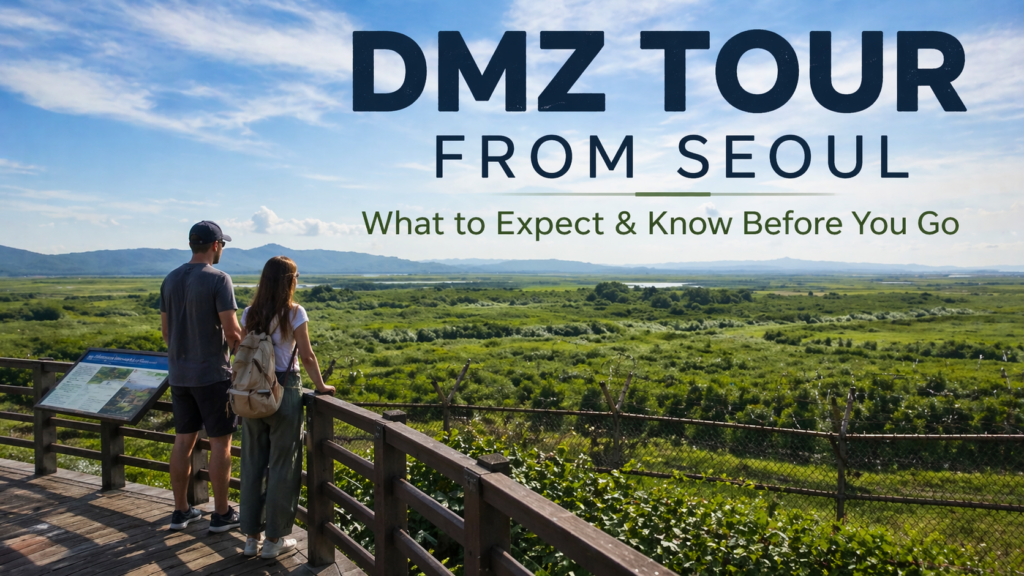
Dora Observatory adds a different kind of impact. It is quieter and more reflective. The view itself is what stays with people. Instead of movement and explanation, there is distance, stillness, and the strange feeling of looking across a border that has defined so much of modern Korean history.
Some routes may include other stops as well, but these three are the core of what most travelers mean when they talk about booking a DMZ tour from Seoul.
Passport, Rules, and Why This Is Not a Casual Day Trip
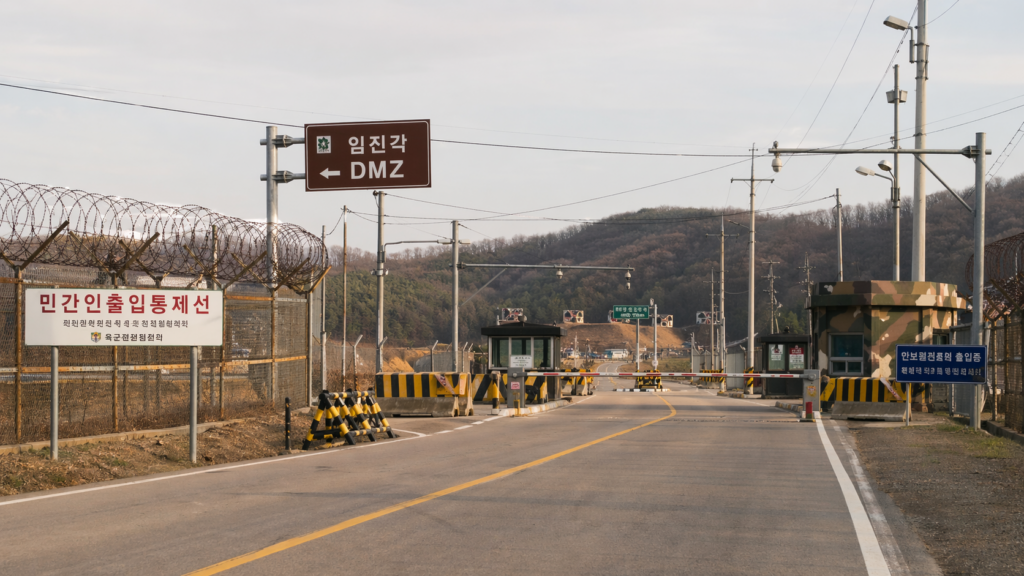
This is one of the most important practical sections for foreign travelers. A DMZ tour is not the kind of outing where you can leave with just your phone and a card holder. Identification matters. On DMZ tours, visitors are expected to bring identification such as a passport or Alien Registration Card(ARC).
That sounds simple, but it is one of the easiest ways for a trip to go wrong. Many travelers get used to moving around Seoul with only a phone, especially after several easy days in the city. The DMZ is different. If identification is checked and you are not properly prepared, this is not the kind of place where staff simply wave the problem away.
Rules also matter more here than in most destinations. Some major stops are accessed only through reserved tours, not casual individual visits. That structured system is not just administrative detail. It shapes the feeling of the day. A DMZ tour is still tourism, but it is tourism inside a sensitive zone with tighter procedures than a normal Seoul itinerary.
Another useful mindset is to avoid treating the schedule as completely fixed in the same way a city museum ticket might be. Border-area tourism is inherently more controlled than central-city sightseeing, so it is always wiser to leave a little flexibility in your day and follow the operator’s instructions carefully.
What the 3rd Tunnel Is Really Like
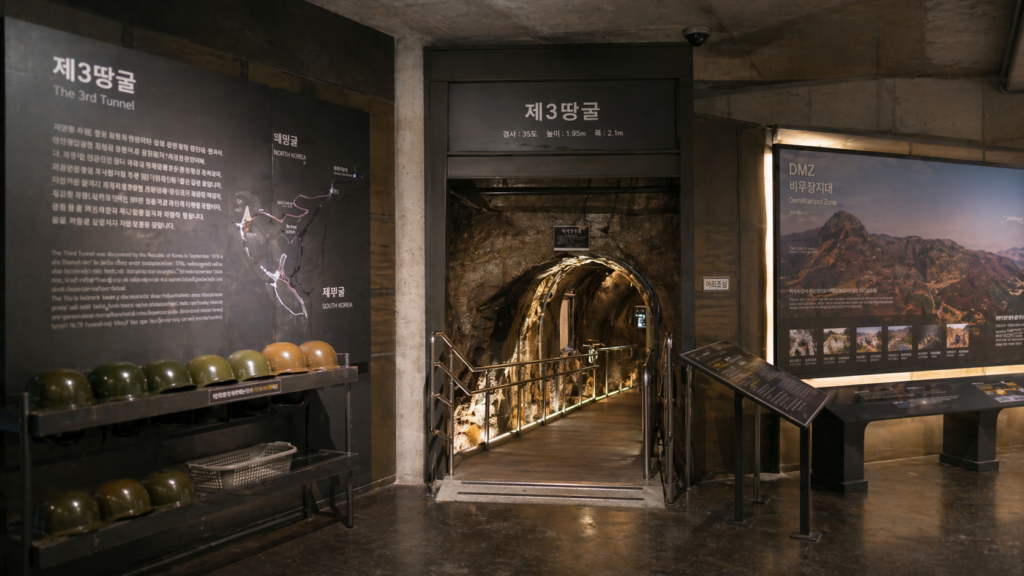
The 3rd Tunnel is often the part of the day that stays in people’s body as much as in their mind. On paper, it looks like one itinerary item among several. In real life, it tends to feel more intense than many first-time visitors expect.
Part of that is historical. The tunnel is not an abstract exhibition. It is a real site tied directly to the reality of infiltration and military planning. That makes the stop feel much more immediate than a standard museum display in Seoul.
Part of the impact, though, comes from the experience itself. This is the point in the tour where comfortable shoes stop sounding like boring advice and start sounding necessary. A DMZ tour is not the ideal day for stiff boots, slippery soles, or fashion-first outfits that make walking awkward. Even travelers who are not especially athletic usually appreciate being dressed practically here.
That practical detail matters because the emotional flow of the day changes at this stop. Before reaching the tunnel, the tour can still feel like a guided history trip. After the tunnel, many people feel the DMZ more personally. It becomes less theoretical and more immediate.
Dora Observatory and the Quiet Part of the Tour
If the 3rd Tunnel feels physical, Dora Observatory feels reflective. It creates a different type of silence. The view is not loud or theatrical, but that is exactly why it works. Many travelers expect a dramatic visual moment and instead find something quieter and more unsettling.
This is often the moment when the DMZ stops feeling like a famous keyword and starts feeling like a real place. Up to that point, many travelers are still mentally organizing the tour like any other attraction. At the observatory, the experience often becomes more emotional. People tend to speak less. They look longer. They think differently about what they have already heard throughout the day.
That emotional shift is one of the best reasons to take the tour. It adds something that ordinary sightseeing cannot reproduce.
Is a DMZ Tour from Seoul Worth It?
For the right traveler, yes. A DMZ tour from Seoul is worth it if you want a day trip that feels uniquely tied to Korea rather than interchangeable with any other capital city itinerary. It is a strong choice for travelers interested in modern history, the Korean Peninsula, and experiences that offer meaning beyond entertainment.
It is especially worthwhile for first-time visitors who want at least one day in Korea that feels deeper than shopping, food, and urban sightseeing. Those things are enjoyable and important, but the DMZ gives context to the country in a way few other destinations can.
At the same time, it helps to be honest about what this tour is not. It is not the best option for someone who wants a lazy day, cute café stops, or a photo-heavy route with minimal structure. The DMZ is more controlled, more serious, and often more emotionally reserved than travelers expect. That is not a weakness. It is simply the nature of the place.
So the real answer is this: a DMZ tour is worth it when you want perspective, not just activity. Go for atmosphere, history, and context, and the tour usually delivers. Go expecting a dramatic action-style border experience, and you may misunderstand what the standard route is actually designed to offer.
Final Tips Before You Book
Before booking, check the exact route carefully. Do not assume all DMZ tours are identical, and do not use “DMZ” and “JSA” as if they mean the same thing. If the itinerary matters to you, confirm that it specifically includes Imjingak, The 3rd Tunnel, and Dora Observatory.
Bring your passport. Wear comfortable shoes. Treat the day as a structured visit rather than a casual free-form outing. That mindset alone usually makes the experience smoother and better.
The best way to understand a DMZ tour from Seoul is simple: it is not just one more famous attraction on a Korea checklist. It is one of the rare places near Seoul where travel, history, distance, and political reality all meet in the same space. That is why people remember it long after the tour ends.
Travel Korea, made simple. Your frist friend in Korea.