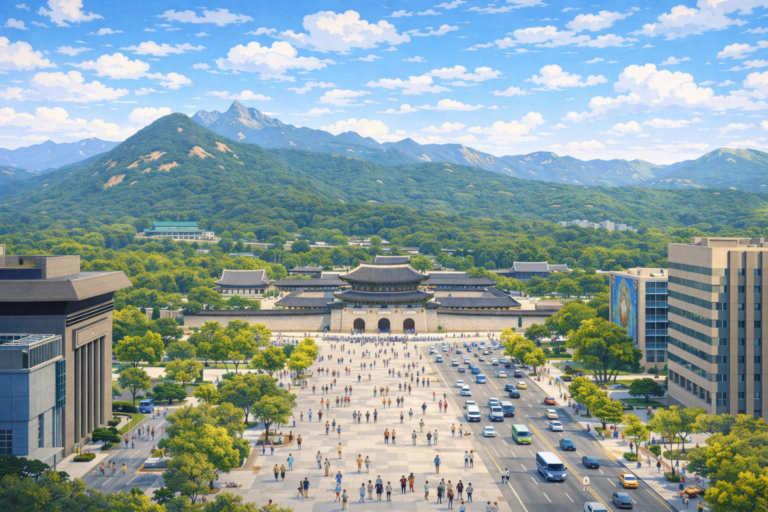
The easiest way to lose money in Seoul is to exchange it too fast.
A lot of travelers land at the airport, see the exchange counter, and just get it over with. It feels easy, and when you are tired, easy feels right. But if Myeongdong(명동) is already on your itinerary, that is usually the smarter place to handle your main exchange.
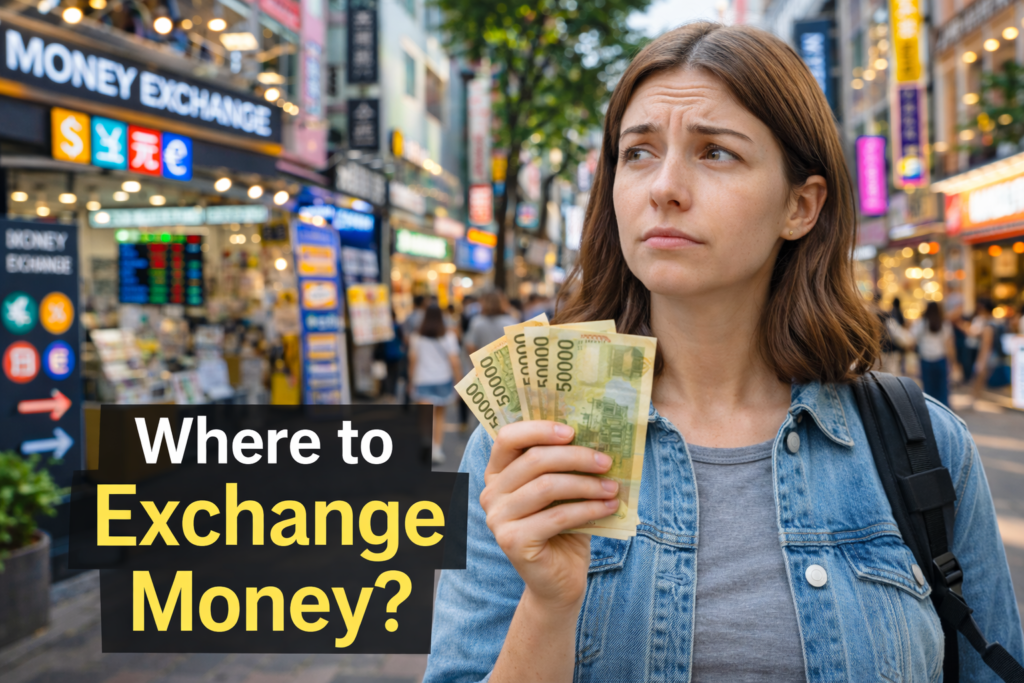
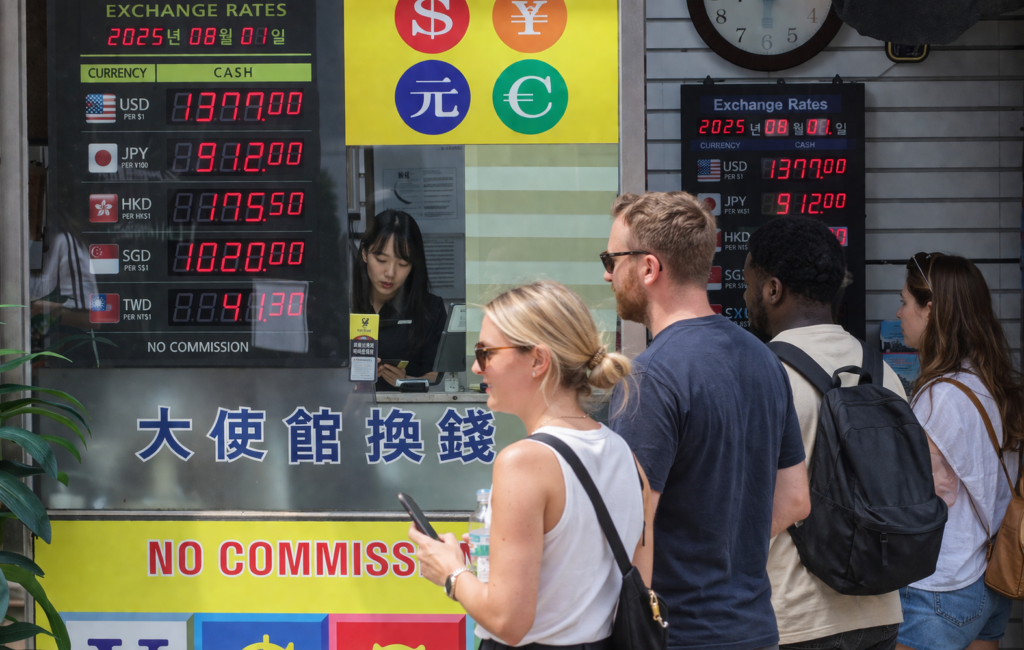
For me, Myeongdong was never just a shopping area. It was where I went when I had foreign currency left after trips, and even after language study abroad. I exchanged leftover Japanese yen and Chinese yuan there more than once. Once the amount gets to around 1 to 2 million won in value, the difference becomes real. Not theoretical. Real enough to pay for a very good meal. That is why I recommend Myeongdong so confidently.
Do You Really Need Much Cash in Seoul?
Not as much as many travelers think.
Seoul is highly card-friendly. In most cases, you can pay by card at cafes, restaurants, convenience stores, major shops, and tourist attractions without much trouble. For many visitors, cash ends up being useful mainly for small purchases rather than for the whole trip.
Still, cash matters. Street food stalls, traditional markets, small local places, and T-money top-ups can be easier with cash. Some travelers also just feel better carrying a little Korean won(KRW), especially during the first day or two.
That is why exchanging everything at once usually does not make much sense.
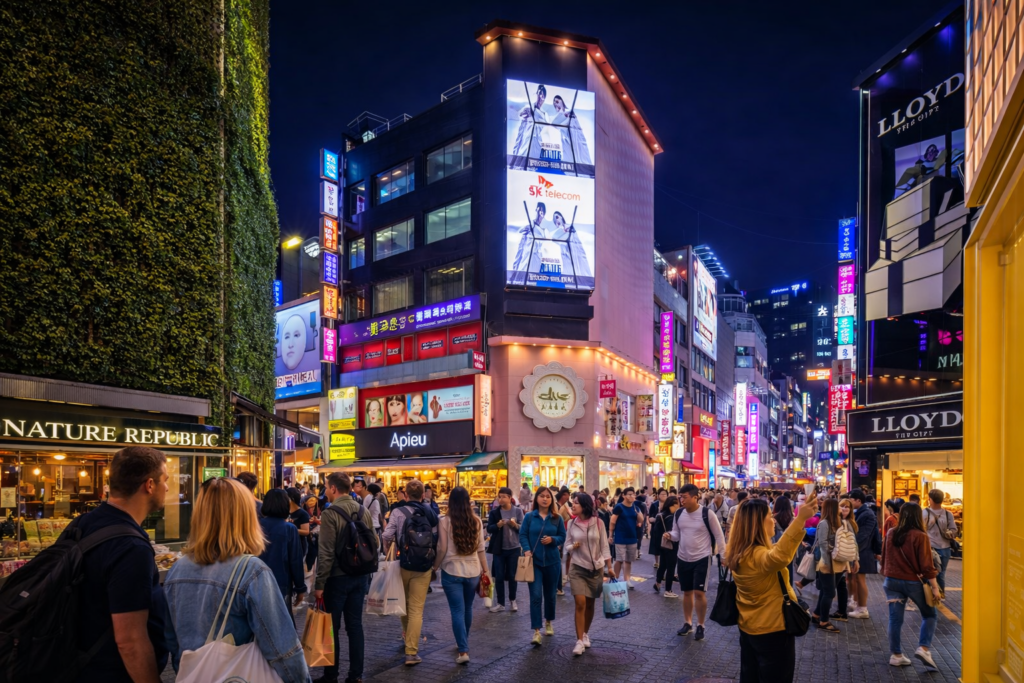
Why Myeongdong(명동) Makes More Sense Than the Airport for Most Travelers
The airport is the easiest place to exchange money. That part is true.
You land, you see the counter, and the task is right in front of you. For tired travelers, that convenience is powerful. But convenience and value are not always the same thing.
Myeongdong works better for most travelers because it fits into a normal Seoul schedule. A huge number of first-time visitors already go there for shopping, beauty stores, food, or simply to walk around one of the most tourist-friendly districts in the city. That means you often do not need to make a separate trip just to exchange money. You are already there.
That is the key point.
You are not turning currency exchange into a special mission. You are simply taking care of it while visiting an area you were likely going to anyway. That makes Myeongdong practical in a way that feels natural, not forced.
There is also a psychological difference. At the airport, people exchange money quickly because they want one less thing to worry about. In Myeongdong, the decision feels calmer. You are already in the city. You are less rushed. You are no longer making choices in arrival mode.
That alone often leads to better decisions.
My Real Recommendation: Airport for Convenience, Myeongdong for the Main Exchange
My advice is simple.
Use the airport only for convenience. Use Myeongdong for the real exchange.
That first airport amount does not need to be large. Just cover what you may need right away: transportation, a quick snack, emergency cash, or a recharge for T-money(티머니). After that, there is no strong reason to exchange the rest immediately unless you truly want everything finished at once.
For most travelers, the smarter rhythm looks like this:
Arrive in Korea.
Handle the basics.
Get into Seoul.
Exchange the rest in Myeongdong when you are already there.
That feels much closer to how real travel works.
Why Leftover Currency Matters More Than People Think
This is the part many people overlook.
Exchanging money before a trip is one thing. Exchanging leftover currency after a trip or after living abroad is another. That is where the difference can feel even more noticeable.
I went to Myeongdong when I had Japanese and Chinese currency left over, and also after language study. In those situations, the amount was not tiny. When the value reaches around 1 to 2 million won, even a modest gap starts to matter. You feel it. It stops being a “rate” and starts becoming actual money you could have spent elsewhere.
At that point, the difference is easily enough for a good meal, and sometimes more than that. That is why Myeongdong feels worth it. Not because it is dramatic or complicated, but because the benefit becomes tangible.
For travelers, that is often the best kind of recommendation: not abstract, not exaggerated, just clearly worth it.
When Airport Exchange Is Totally Fine
To be fair, the airport is still the most comfortable option.
When you are exhausted, arriving late, carrying luggage, or simply do not want to think about this anymore, just exchange money at Incheon International Airport(인천국제공항). There is nothing wrong with that. It is easy, obvious, and stress-free.
That is why I would never say airport exchange is a bad choice.
I would just say this: do not do all of it automatically.
Airport exchange is the “I want this done now” option. Myeongdong is the more sensible city option when it already fits your route.
Who Should Definitely Consider Exchanging in Myeongdong?
Myeongdong makes especially good sense for travelers who already plan to visit the area, are staying somewhere central, or prefer to keep airport decisions minimal.
It also makes sense for anyone dealing with leftover foreign currency after a trip. That is where the practical advantage feels more obvious, especially when the amount is large enough to matter.
In other words, Myeongdong is not just a place to shop. For many travelers, it is also one of the best places in Seoul to take care of a small but important part of the trip without doing it in a rush.
A Few Simple Tips Before You Exchange Money
Bring your passport, since identification may be requested. Do not exchange more cash than you realistically plan to use. Keep some smaller bills for day-to-day spending, and do not carry everything in one place.
Most importantly, think of cash as support, not as your main payment method. Seoul is too card-friendly for most travelers to need a wallet full of cash from day one.
That mindset alone can save you from exchanging too much too early.
Final Thoughts
Where should you exchange money in Seoul?
My answer is simple. When convenience is all that matters, use the airport. When Myeongdong(명동) is already part of your plan, that is usually the smarter place to do your main exchange.
That is the option I trusted when exchanging leftover Japanese yen and Chinese yuan, and also after time abroad. Once the amount gets bigger, the difference stops being small. It becomes something you actually feel.
Myeongdong is not just famous. It is practical. And for many travelers, practical is exactly what matters most.
Travel Korea, made simple. Your frist friend in Korea.